I Preached Over 100 Sermons — Here’s What I Learned
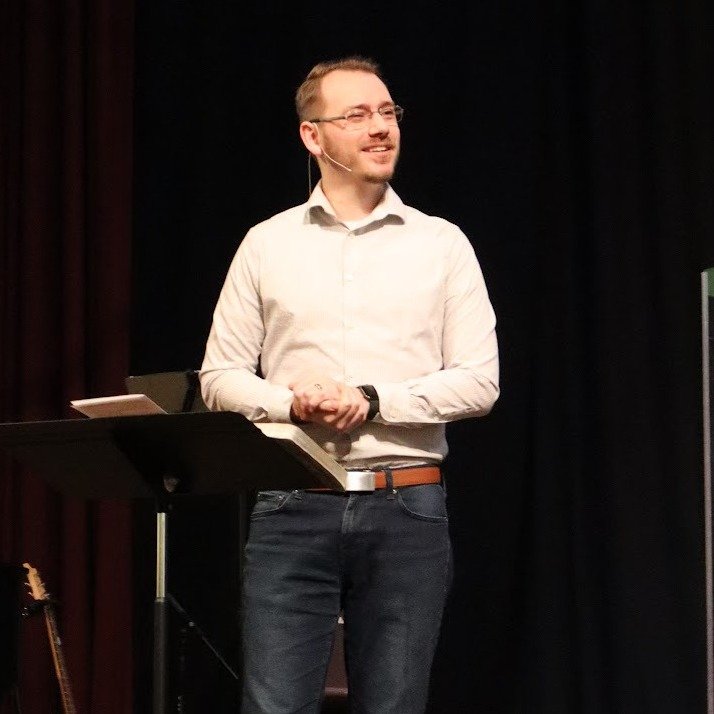
Since the beginning of my vocational ministry, I have preached over 100 messages. Any time you do something significant 100 times, there are lessons that sort of “emerge.” It is a strange comparison to make, but I’ve seen the world-famous YouTuber Mr. Beast give advice on how to make successful videos. He never gives a list, he does not talk about SEO, he does not talk about shot composition or pacing. All he says is, “go make 100 videos and then come back and talk to me.” He knows something true… some of the most important lessons come by doing — not by thinking only. This is not to say thinking is not important, but life-lessons come by thinking about what you will do, doing it, and then reflecting on what you’ve done. The last two steps cannot happen if you never jump in.
After going through this process 100 times (likely more, but we’re rounding here), here are three lessons I’ve learned.
Lesson 1: Theological Depth and Practicality Can Co-Exist
I cannot tell you how many pastors make these two concepts, depth and practicality, an “either-or” proposition. Many will brag about how they do not get “in the weeds” and make sure that their messages are practical. Others believe that theological depth alone is implicitly practical, thinking that a deeper understanding of theology creates deeper worship. On some level, both are right. It is easy to get too in the weeds and miss the practical side of faith, but also when we seek to understand God deeply it is proper to respond to God in worship (Isaiah 6). But there also must be clear “next steps” in your message.
But theological depth and practicality are not an either/or, both can exist in the same message (and both are wanted!). This insight acknowledges that people have different learning styles. Some people delight in the information. I am like this. Simply learning something new about God, the Bible, or a finer point of theology leads me to worship. I feel close to God when I learn. But not everyone is wired like this, in fact, I would suggest that only about 25% of any congregation is like this. Most people are asking “how do I use this?” If I cannot clearly lay out how a theological insight is useful, it is not helpful to most. Both theological depth and practicality take work to find and connect. Both must be derived from the text, and not from my imagination or soap box. But I’ve found that when I spend time listening to the Word of God, and seeking to understand what it is saying, those teachings and application are something that my church needs — whatever it might be. Listening to the word, seeking to understand it, and taking the time to mine for its insights leads to my second lesson:
Lesson 2: Prep With A Crock Pot Not A Microwave
Many (MANY) pastors look at a mostly blank sheet of paper until deep into the week, perhaps until Friday or Saturday. This is because there are a variety of demands that pastors must balance: care, leadership, vision casting, discipleship, counseling, organizing, etc. Even though it is a priority to the pastor to get going on his sermon early in the week, it is never other people’s priority. This is not a compliant! It is a reality and an observation. Of course other people do not have my priorities, they have their priorities. And these things are often not mutually exclusive. However, the only person who checks in on my sermon prep each week is my worship director (because she needs to know the direction so she can pick songs). Other than her, the demands on my time could easily swallow up my week… leaving me with an empty page on Saturday night. If this is the case, my only option is to “microwave” a sermon and hope for the best. But the best messages I’ve ever preached came when I spent months collecting insights, illustrations, and had time for revision.
With all of these demands, here are three key sermon-prep habits I’ve developed over the last two years to keep me on track.
1. A sermon calendar that lays out at least the next 12 months
This might sound crazy, but I know what I am preaching about, right now, for all of next year. I know when I am giving myself weeks out of the pulpit, I know when sermon series start and end, I know the text and general point I want to make. I also have a grid by which I pick topics or books, stay balanced between the Old and New Testaments, and ensure that I am preaching to various levels of spiritual maturity.
Here’s the key, though, I am not married to this sermon calendar. There have been multiple times that I have changed something because, after thought, my church needed something else. But because the change happened months in advance, this did not throw anyone else off due to me shooting from the hip.
2. The next four messages outlined and researched
You might say, “this is impossible.” I thought so too. But if you have #1 in place, this is much easier. Because (typically) sermon series builds one on the other, you inevitably read something or find an illustration that would fit better in a future sermon rather than the one that is coming up. Rather than forgetting it, or putting it in a note you cannot find later, just write it in that future sermon document right away. If you spend the time outlining the passage, putting down key observations and organizing scholarly research, you get to the next week of sermon prep with a ton of momentum.
This past summer I preached through Psalm 23, and I spent three weeks on the passage. Prior to the start of the series, I had all three sermons researched, organized, outlined, and partially written. At one point, I had all three sermons open on my computer, and I had found a great illustration I wanted to use somewhere. It was such a fun creative process to take a look at the whole three-week series. I got to plop in quotes, illustrations, and insights into the best place for them, not just the most immediate place.
3. I put hard boundaries around my sermon prep time
When I start my week off with a solid time of prep on Monday morning, the rest of the week flows much better. The opposite is also true, but that has rarely happened to me. This is because my sermon prep time is sacred — I am not available for most things. This boundary flows from my comment about priorities. I must ensure that I start the week off having already made significant progress on my sermon, because if I do not, the week could get away from me.
Because I have both habit #1 and habit #2 in place, most Mondays by lunch I could deliver the sermon. Granted it would not be as polished, but this underscores the “crock pot” analogy. I now have time to refine, pray, have my antenna up for illustrations or examples, and (yes) change something through the week. I know some pastors take Mondays off, and for many years I did too. But I’ve found that I am dwelling on what happened on Sunday and next week’s sermon all day on Mondays anyway. Might as well lean into that tendency and take a different day off. But rhythms require systems, which is my third lesson:
Lesson 3: Utilize the Right Tools and Systems
A professional with a shovel is less productive at digging a hole than an amateur with a back hoe. The tools we use matter, and using the wrong tools creates inefficiencies. Carey Nieuwhof says that we do not rise to the level of our goals, rather, we fall to the quality of our systems.
Specifically when it comes to sermon writing and delivering, I rely on three tools: my 12.9 inch iPad, ProPresenter, and Logos Bible Software. It sounds cliche, perhaps for a millennial preacher like myself, but my iPad makes the whole process a lot smoother. Rather than fumbling with paper, my iPad turns my sermon notes into something that I scroll vertically, as if reading an article, rather than a page-turning effort. On my iPad, I run the Logos Bible Software app and get my sermon notes. They have a preaching view that I can set a “time remaining” section to keep me on track, and warn me when I’m over. It also syncs to my computer if I make last second changes to my notes (no more printing off new versions of my message every time I make a change!). And next to my notes are my slides with the ProPresenter remote app. There I can view my current and next slide, and advance it myself. Some preachers can keep the flow if they have to mention “next slide” to the slides operator, but I prefer being able to tap the button to keep things moving along.
But by far the most beneficial tool is using Logos for sermon writing and research. I’ve told pastors that, if they are willing to learn it, it will save them 2-4 hours a week on prep. Why? My old workflow involved finding a number of resources, searching for the right spot, reading, highlighting, and gathering information. If I needed a quote, my option was to weigh down a book with something heavy as I typed in the quote, or finding one of those “text scanning apps” and then emailing it to myself. With Logos, I highlight, copy, then paste. Done. When I do my research, I have my notes organized by sermon series, and then subdivided by passages. Rather than highlighting something in a commentary that will end up on my bookshelf, I copy the quote into a note that is tagged to my passage. Essentially, I create my own curated digital commentary for each passage I preach on. Then when I’m ready to assemble my sermon, I start with notes, quotes, word studies, and illustrations I can paste into my sermon document.
This list scratches the surface of what Logos Bible Software can do. I highly encourage you to try the free trial and get 60 days for free.
Summary
Depth and practicality co-exist, prep with a crock pot, and utilize good tools. After 100 (plus) sermons preached, and a lot of trial/error, I hope that these insights help others in the high calling of preaching the Word of God.